

Signs of a heart emergency: recognize and react quickly in Tangier
Chest pain, sudden breathlessness, feeling faint or palpitations: learn to recognise the signs of a cardiac emergency and what to do, so you call the emergency services without losing a minute.
Written by Dr Mohamed el Amine Tber, cardiovascular surgeon in Tangier
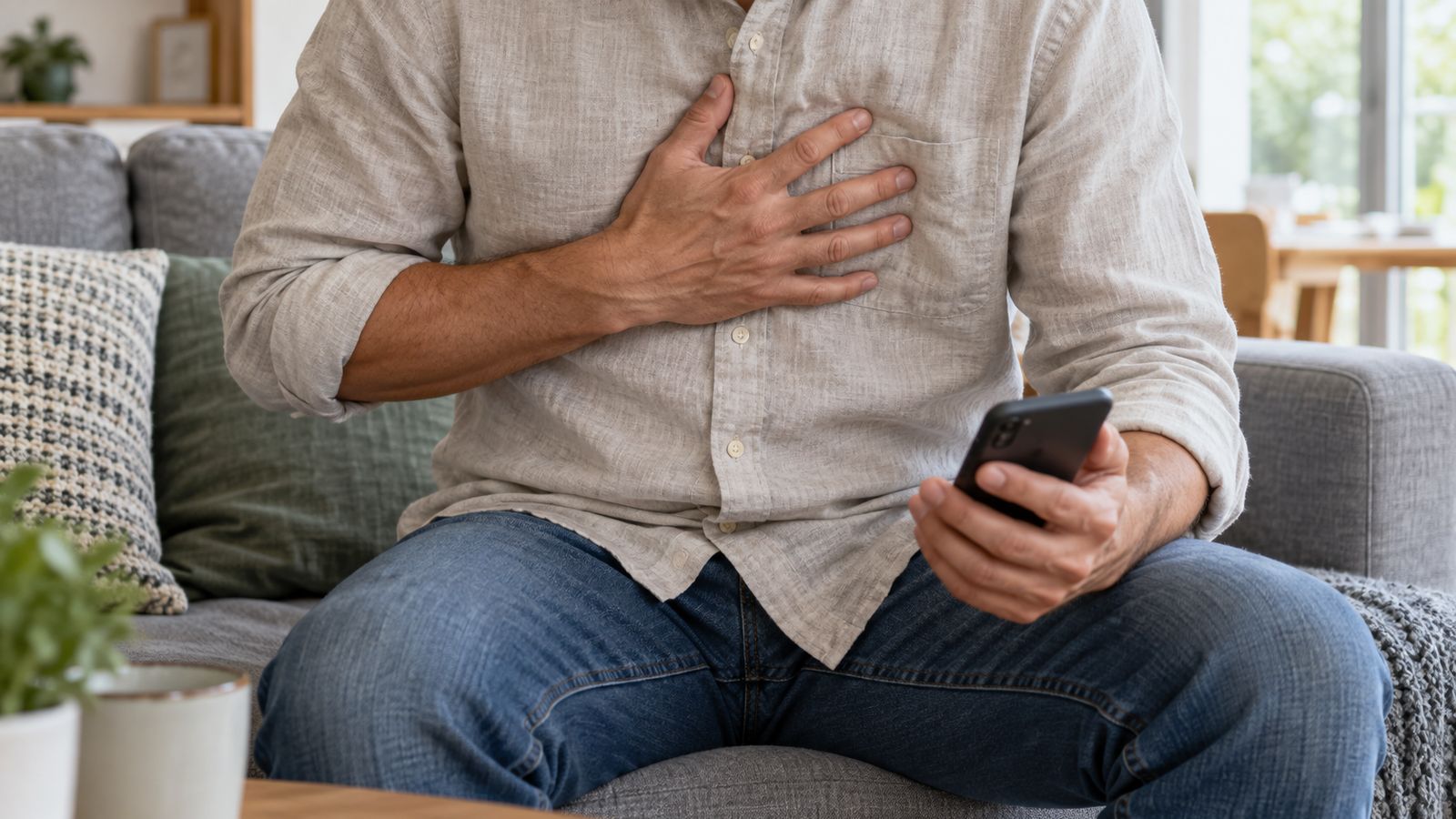
Chest pain that lasts more than a few minutes, sudden breathlessness, or feeling faint with sweating: these signs mean you must call 141 (SAMU) or 15 (Civil Protection) immediately. In a heart attack, as in cardiac arrest, every minute lost costs heart muscle and chances of survival. Yet many people hesitate, play it down or wait for it to pass. Here is how to recognise a cardiac emergency and the actions that really help while waiting for help to arrive, explained by the practice of Dr Tber, cardiovascular surgeon in Tangier.
Key figures
- 2 to 3 times
- Chest compressions started immediately by a bystander can double, or even triple, the chances of survival after cardiac arrest. American Heart Association
- 7 to 10%
- In cardiac arrest, the chances of survival fall by about 7 to 10% for every minute without chest compressions or defibrillation. Postgraduate Medical Journal, 2007
- 120 min
- Beyond two hours between the diagnosis of a heart attack and angioplasty, angioplasty loses its advantage: the aim is to reopen the artery in less than 60 to 90 minutes. European Society of Cardiology, 2023
- 93 %
- In a Scottish study, 93% of both women and men who had a heart attack felt chest pain. British Heart Foundation, 2019
What are the signs of a heart emergency?
A serious heart problem can announce itself suddenly and forcefully, or start quietly and then worsen. It matters to know the full range of symptoms, because they do not always come down to the classic chest pain.
- Chest pain or discomfort : a sense of pressure, tightness, a vice-like grip, heaviness or burning in the centre of the chest, lasting more than a few minutes, or going away and coming back.
- Pain that irradiates : into one arm (often the left) or both, the shoulder, the back, the neck, the jaw, the teeth or the upper abdomen.
- Severe shortness of breath : difficulty breathing, at rest or on exertion, with or without chest pain.
- Malaise and associated signs : cold sweats, clammy skin, nausea or vomiting, dizziness, light-headedness or the feeling that you are about to faint.
- Palpitations : a racing heart, an irregular beat, or a heart that seems to skip beats, above all if it comes with feeling faint, breathlessness or pain.
These symptoms are neglected too often
Some warnings are more deceptive than others. A heart attack can happen without marked chest pain: this is sometimes called a silent heart attack, where all you get is breathlessness, unusual tiredness, nausea or sweating.
Women: sometimes different signals
Chest pain remains the most common symptom in women and men alike. Women do, however, more often have associated signs, such as nausea or pain spreading to the jaw or back, and on average they wait longer before calling for help. In the Scottish study mentioned above, 33% of women had nausea, versus 19% of men. These signs deserve exactly the same vigilance.
Elderly and diabetics
In older people and in those with diabetes, the pain may be muted or absent altogether. Sudden exhaustion, confusion or simple breathlessness should then put you on alert.
Chest pain: when should you go to the emergency department?
The question comes up often at the practice, and the answer comes down to one rule: with new chest pain, call first and think afterwards.
- Call immediately if the pain squeezes, presses or burns in the middle of the chest, lasts more than a few minutes, comes back, spreads to the arm, jaw or back, or comes with sweating, breathlessness or feeling faint.
- Also call if you already have heart disease, a stent or a bypass, and an unusual pain appears or does not ease with rest.
- See a doctor soon for a brief pain that is triggered by pressing on the chest or by a particular movement: it is more often muscular in origin, but a new pain always deserves a medical opinion within the following days.
If in doubt, call. Do not drive yourself to the emergency department: in an ambulance, care begins as soon as the emergency team arrives.
Heart attack or cardiac arrest: understanding the difference
These two are often confused, yet they do not share the same mechanism or the same immediate response. Telling them apart helps you react correctly.
| Heart attack (infarction) | Cardiac arrest |
|---|---|
| A plumbing problem: an artery blocks and starves the heart muscle of blood. | "Electric" problem: the heart stops beating brutally. |
| The person remains most often conscious and breathes. | Sudden loss of consciousness, lack of pulse and breathing. |
| Pain, shortness of breath, progressive or intense discomfort. | Often without warning signs, sometimes preceded by pain or palpitations. |
| An absolute emergency: call the emergency services without waiting. | An immediate, life-threatening emergency: call the emergency services and start chest compressions. |
An untreated heart attack can turn into a cardiac arrest. That is why you must never sit on warning signs.

Good reflexes in the face of signs of a heart emergency
Doing the right things in the first seconds markedly improves the chances of recovery and limits the damage to the heart.
- Call the emergency services immediately in Morocco: 141 (SAMU, emergency medical service) or 15 (Civil Protection, ambulances and fire brigade, also reachable on 150 from a mobile phone). Do not wait for the symptoms to pass.
- Don't drive yourself. and do not ask a relative to drive you if the situation is worrying: an ambulance can start treatment on the way.
- Get down to rest, sitting up or half-sitting, loosen tight clothing and stay calm until help arrives.
- In case of loss of consciousness and not breathing: call the emergency services and start chest compressions (firm, steady pushes on the centre of the chest); use an automated external defibrillator (AED) if there is one nearby.
- Do not take any medication on your own initiative. The doctor handling the emergency call may tell you to take aspirin if you are not allergic to it: follow their instructions and keep the list of your medications within reach.
Chest compressions can be learned in a few hours on a first aid course. Started straight away, they can double or triple the chances of survival of a person in cardiac arrest.

When to call the emergency room without waiting
The rule is simple: if in doubt, call. A false alarm is better than a heart attack treated too late. Contact the emergency services without delay if you or someone nearby has:
- chest pain that lasts more than a few minutes or comes back;
- brutal and unusual shortness of breath;
- malaise with sweat, nausea or fainting;
- palpitations associated with discomfort, dizziness or pain;
- loss of consciousness, especially if breathing is absent or abnormal.
Time is muscle: the sooner treatment starts, the less irreversible damage the heart takes.
The signs of a stroke are different: the face drooping on one side, a weak arm, slurred speech. They call for the same immediate call for help.
Read also: preventing stroke and screening for carotid stenosis
Anticipating: Watching your heart outside the emergency
Recognising an emergency is vital, but prevention matters just as much. Regular cardiovascular follow-up makes it possible to detect risk factors in time (high blood pressure, cholesterol, diabetes, smoking) as well as certain diseases of the heart or blood vessels.
In Morocco, more than half of adults aged 30 to 79 who have high blood pressure have never been diagnosed: a simple blood pressure check during a consultation can change everything.
Cardiology consultation in Tangier: heart check-up, review of your tests and a second opinion
Read also: 7 habits to protect your heart
Read also: normal or irregular heart rhythm, when to see a doctor
If you have risk factors, or symptoms that worry you outside any emergency, a cardiovascular check-up lets you assess your heart calmly and act before things become critical.
If life is at risk, do not wait: call 141 (SAMU) or 15 (Civil Protection) immediately. For a check-up, a specialist opinion or cardiovascular follow-up, Dr Tber's practice in Tangier is open to you and reachable around the clock. Make an appointment now to protect your heart, it's already a good first reflex.
Frequently asked questions
Chest pain: should you go to the emergency department?
Should you take aspirin while waiting for help?
What is a massive heart attack?
Which number should you call in Morocco for a cardiac emergency?
Sources and references
External resources, opened in a new tab.
- Heart attack: symptoms and what to do NHS
- CPR: facts and figures American Heart Association
- Heart attack symptoms in women British Heart Foundation
- 2023 guidelines on acute coronary syndromes European Society of Cardiology
- Emergency numbers in Morocco Embassy of France in Morocco
- Cardiovascular diseases: key facts WHO
Readable also
On the blog
Having heart surgery in Morocco when you come from elsewhere in Africa: how much to budget for the operation, the stay and the journey
A heart operation in Tangier costs between 70,000 and 150,000 DH depending on the procedure, or about 6,400 to 13,600 euros. For a patient coming from Senegal, Côte d'Ivoire, Cameroon or elsewhere, you also need to add the journey, the stay and the person accompanying you. Here is the full budget, item by item.
Read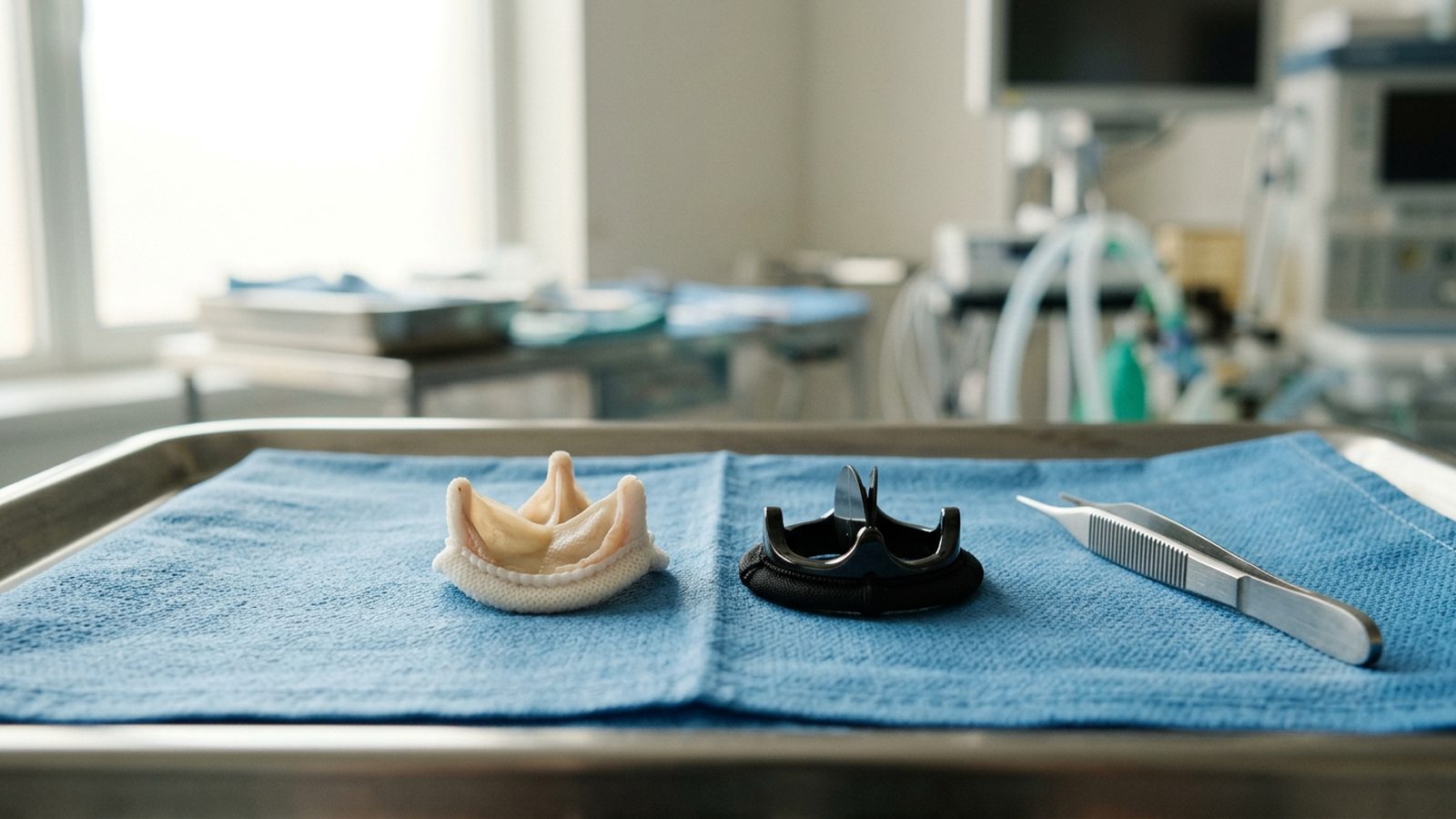
Heart valve replacement: how long the operation takes, biological or mechanical valve, success rate and cost in Morocco
A heart valve that no longer opens enough, or that leaks, ends up wearing the heart out. When medicines are no longer enough, it is replaced. What happens in the operating room, the choice between a biological and a mechanical valve, the real risks, recovery and the cost in Morocco.
Read