

Coronary angiography in Morocco: cost, CNSS coverage, and what happens after the test
A coronary angiography costs between 8,000 and 15,000 dirhams in Morocco, and up to 30,000 to 45,000 dirhams if a stent is placed at the same time. For CNSS members, the test is one of the conditions covered at 100% after prior approval. What drives the price, the steps, and the three possible outcomes.
Written by Dr Mohamed el Amine Tber, cardiovascular surgeon in Tangier
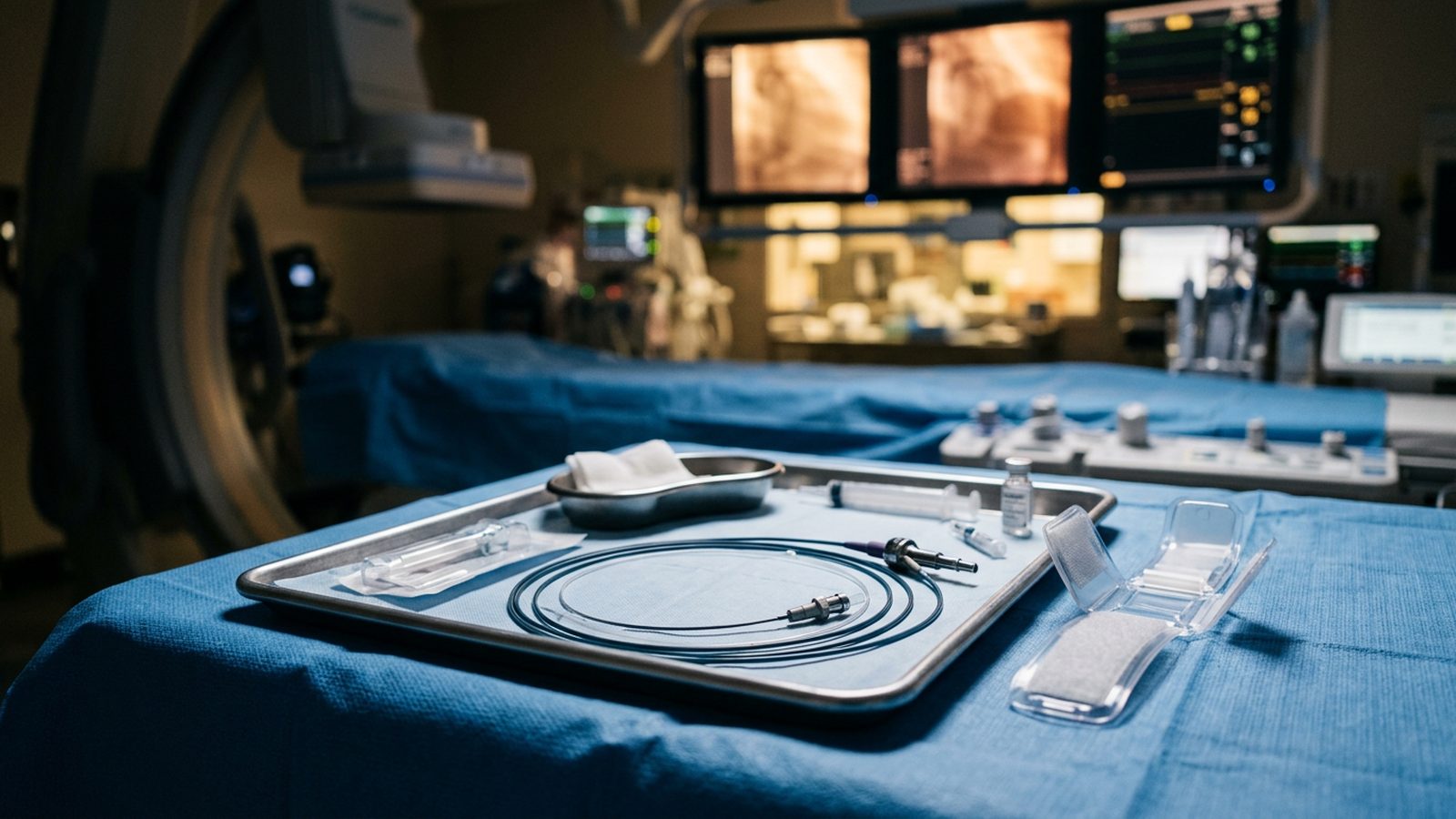
Coronary angiography is the test that shows the heart's arteries from the inside. A thin catheter is passed from the wrist or groin up to the heart, a contrast dye is injected, and the narrowings appear on the screen. It is the test that decides what comes next: medicines, stent or bypass. Here is what it costs in Morocco, what the CNSS covers, and what happens afterwards.
The cost of a coronary angiography in Morocco
For the test alone, in a private clinic, expect between 8,000 and 15,000 dirhams. The gap depends on the city, the length of stay, the access route, and the catheterisation lab package. If the cardiologist places one or more stents at the same time, which happens about one time in three, the total rises to 30,000 to 45,000 dirhams, the drug-eluting stent alone costing 8,000 to 15,000 dirhams.
The orders of magnitude
- 8,000 to 15,000 MAD
- Angiography alone, in a private clinic, one-day stay included.
- 30,000 to 45,000 MAD
- Angiography and angioplasty with one or two drug-eluting stents at the same time.
- 100%
- CNSS coverage of the reference tariff for AMO members, after prior approval.
- 1 in 3
- About one angiography in three leads to a stent at the same time; the others to medical treatment or a bypass.
These amounts are orders of magnitude observed in 2026; the exact quote depends on the case and the facility. Ask for it in writing before the test, with any stents mentioned.

What the CNSS covers
Coronary disease, angina and heart attack, is on the AMO list of long-term conditions. Angiography, angioplasty and stents are therefore covered at 100% of the national reference tariff after prior approval by the fund. In an approved clinic, the facility is paid directly: you do not advance the cost of the test.
Two limits to know. First, the reference tariff is sometimes lower than the price charged by the clinic, and the difference remains at your expense or that of your complementary insurance. Second, certain special devices may fall outside the package. Have both points clarified on the quote. In an emergency, a heart attack, the prior approval is regularised afterwards: you will not be made to wait.
Read also: how much heart surgery costs in Morocco and how the CNSS covers it
The steps, in order
- The cardiologist completes the coverage request with the report of your tests, stress test, CT scan or scintigraphy.
- The clinic sends the request to the CNSS; approval arrives within a few days outside emergencies.
- On the day of the test: fasting, recent blood test, list of your medicines. Anticoagulants and metformin are sometimes stopped the day before on the doctor's instruction.
- The test takes thirty to sixty minutes, under local anaesthesia at the wrist. You remain awake.

After the test: three possible outcomes
Angiography is not a treatment, it is a map. Three paths lead from it.
- The arteries are little or not narrowed: medical treatment, control of risk factors, and you go home reassured.
- One or two short narrowings on an accessible artery: angioplasty with stent, often at the same time, then dual antiplatelet therapy for six to twelve months.
- Several arteries affected, left main stem, long or calcified lesions, especially in diabetics: coronary bypass protects better over ten years. The decision is made in a meeting between cardiologist and surgeon, with you.
Read also: after a coronary angiography, stent or bypass, how the next step is decided
Bypass or stent: who decides
In Morocco as elsewhere, the rule is the case conference: the cardiologist who did the test, the cardiac surgeon and you. The stent quickly repairs a simple lesion; the bypass treats several arteries at once and lasts longer in patients with extensive lesions. My role as a surgeon is to tell you honestly, with the images, which of the two situations you are in, and what each option brings you at five and ten years.
Read also: recovery after coronary bypass, your week-by-week guide
When to consult
If an angiography has been prescribed and you want to understand the quote, if the test showed several lesions, or if a bypass has been proposed and you are hesitating, bring your images. Dr Tber, cardiovascular surgeon in Tangier, reads them with you and tells you, without bias, whether the stent or the bypass is the best answer for you.
Frequently asked questions
How much does a coronary angiography cost in Morocco?
Does the CNSS cover coronary angiography?
How long do you stay in hospital?
When is a bypass needed rather than a stent?
Sources and references
External resources, opened in a new tab.
- List of long-term conditions and serious, costly conditions (ALD/ALC) National Social Security Fund (CNSS)
- What does the AMO cover? National Social Security Fund (CNSS)
- 2024 ESC Guidelines for the management of chronic coronary syndromes Société européenne de cardiologie, European Heart Journal 2024
- Coronary angiography, information patient NHS, 2023
Readable also
On the blog
Having heart surgery in Morocco when you come from elsewhere in Africa: how much to budget for the operation, the stay and the journey
A heart operation in Tangier costs between 70,000 and 150,000 DH depending on the procedure, or about 6,400 to 13,600 euros. For a patient coming from Senegal, Côte d'Ivoire, Cameroon or elsewhere, you also need to add the journey, the stay and the person accompanying you. Here is the full budget, item by item.
Read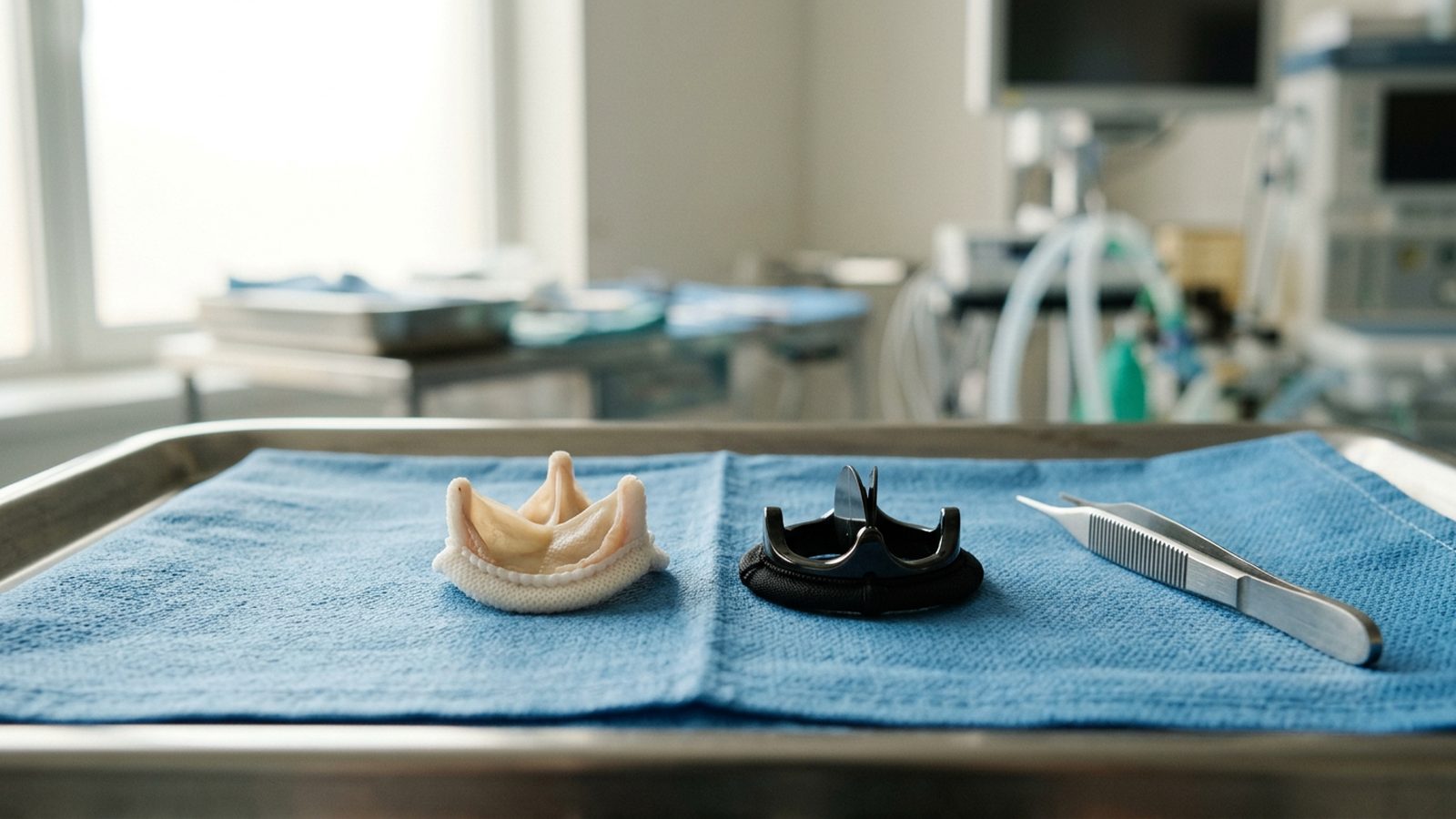
Heart valve replacement: how long the operation takes, biological or mechanical valve, success rate and cost in Morocco
A heart valve that no longer opens enough, or that leaks, ends up wearing the heart out. When medicines are no longer enough, it is replaced. What happens in the operating room, the choice between a biological and a mechanical valve, the real risks, recovery and the cost in Morocco.
Read