

Minimally invasive heart surgery in Tangier: answers to your frequently asked questions
Operate the heart without opening the sternum, with a small lateral incision: Dr.Tber, a cardiovascular surgeon in Tangier, answers your questions about minimally invasive heart surgery clearly.
Written by Dr Mohamed el Amine Tber, cardiovascular surgeon in Tangier
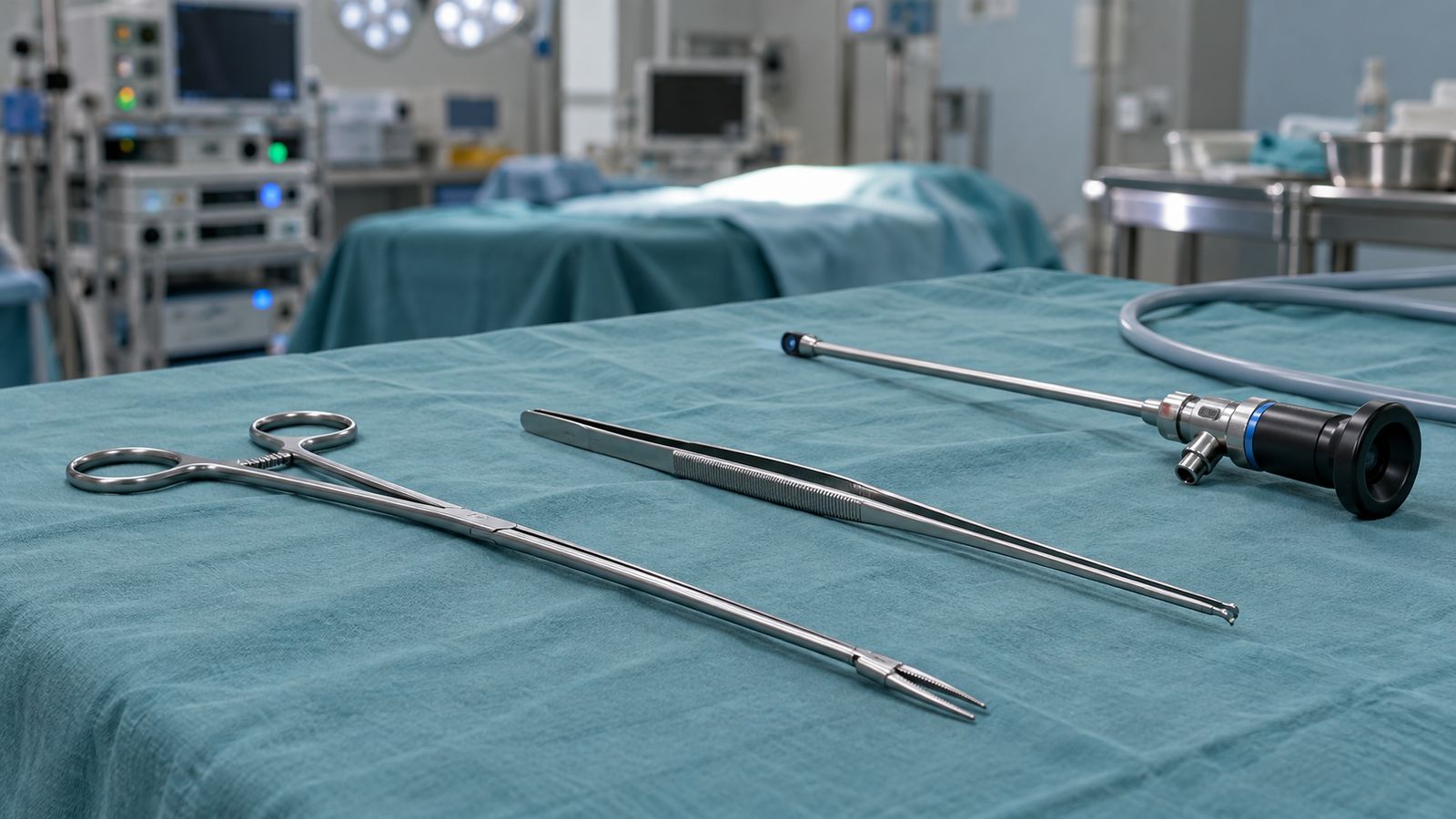
Being told you need heart surgery naturally raises a great deal of anxiety. One question comes back again and again in consultation: does the chest really have to be opened all the way? For a growing number of patients, the answer is no. Minimally invasive heart surgery now makes it possible to treat certain diseases of the heart's valves and arteries through a small incision in the side, without dividing the breastbone. At Dr Tber's practice in Tangier, this approach is among the options discussed when the patient's anatomy and condition lend themselves to it. Here are the answers to the questions patients ask most often.
Key figures
- 4 to 7 cm
- This is the length of the incision on the side of the chest in the large UK trial of minimally invasive mitral valve surgery. UK Mini Mitral trial, BMJ Open, 2021
- 96 %
- The mitral valve was repaired in about 96% of cases, with mini-thoracotomy and sternotomy alike. UK Mini Mitral trial, JAMA, 2023
- 5,4 %
- At one year, death, reoperation or hospital admission for heart failure affected 5.4% of patients operated on by mini-thoracotomy, versus 6.1% by sternotomy. UK Mini Mitral trial, JAMA, 2023
- 1 day
- This is, on average, how much shorter the hospital stay was with the minimally invasive approach in this trial. NIHR, 2025
What is minimally invasive heart surgery?
The Minimally invasive heart surgery covers techniques that allow the heart to be operated on while limiting how far the chest is opened. Instead of the long vertical incision down the middle of the chest with the breastbone divided (the conventional sternotomy), the surgeon goes in through a small incision between the ribs on the side, called a mini-thoracotomy.
In concrete terms, this means:
- an incision of only a few centimetres, often 4 to 7 cm, on the side of the chest;
- a bone of the sternum that remains intact, which greatly changes recovery;
- the use of fine instruments and, where appropriate, a camera to see the heart.
You will find a full account of this technique on our page devoted to Minimally invasive heart surgery.
What diseases can be treated without sternotomy?
Not all heart operations lend themselves to the minimally invasive approach, but the scope of the indications has expanded in recent years. Among the situations frequently concerned:
- diseases of mitral valve (repair or replacement)
- certain aortic valve ;
- closing certain holes between the chambers of the heart, and removing benign tumours inside it;
- of targeted forms of Coronary bypass when the blood damage is suitable.
Where the situation calls for full access to the heart, the conventional open-chest operation remains the safest standard: that is the subject of our page on open heart surgery. The pathologies of the aorta are detailed on the page aorta surgery.
Read also: aortic stenosis, when is surgery needed
Am I eligible for this technique?
Whether you are a candidate is never decided lightly. Before any decision the surgeon weighs several things, usually with a heart ultrasound and a chest CT scan:
- the type and severity of heart disease;
- the anatomy of your chest, heart and vessel;
- your history (previous chest surgery, lung disease, heavy calcification of the arteries);
- Your general condition.
Some situations make the minimally invasive approach not recommended, for example very important calcifications of the vessels, some anatomical anomalies or marked pulmonary adhesions. Therefore, preoperative balance is essential: it allows you to choose the safest route first for you, not the reverse.
Is pain less important?
This is one of the main advantages reported in the recent medical literature. Because the breastbone is not divided, pain after the operation is generally less than after a sternotomy, and less painkilling medication is needed. Many patients are also reassured by getting moving sooner in the first few days.
Let us be honest: heart surgery is still major surgery, and discomfort around the incision is normal for a few weeks. The aim is not the complete absence of pain, but discomfort that is better controlled and a more comfortable recovery.

How long does hospitalization and recovery last?
Timescales vary with each patient, the operation performed and progress after surgery. The large UK Mini Mitral trial, which compared the two approaches in 330 patients having mitral valve surgery in 10 centres, gives useful benchmarks.
| Element | Mini-thoracotomy compared with sternotomy |
|---|---|
| Hospital stay | About one day shorter on average |
| Physical recovery at 12 weeks | Comparable |
| Successful valve repair | About 96% in both groups |
| Serious complications at one year | 5.4% versus 6.1% |
These figures are broad orders of magnitude drawn from general studies, not an individual promise. Your recovery plan, including rehabilitation and getting back to physical activity, will be tailored to you and explained step by step.
Read also: recovery after coronary bypass surgery, week by week
What will the scar look like?
The scar is one of the most visible advantages. Instead of a long vertical scar down the middle of the chest, the incision in the side is far shorter and often more discreet, sometimes sitting in a natural crease or under the breast. Dissolvable stitches placed under the skin add to the cosmetic result.
Beyond appearance, several studies point to a psychological benefit: a better self-image and, at times, an easier return to social life after the operation.

Is it really as safe as conventional surgery?
Safety is the absolute priority. In the UK Mini Mitral trial, published in JAMA in 2023, each surgeon operated only with the technique they had mastered. The result: valve repair in about 96% of cases with both techniques, and comparable serious complications at one year, 5.4% after mini-thoracotomy versus 6.1% after sternotomy.
The trial did not show faster physical recovery at 12 weeks, but a slightly earlier discharge from hospital. The 2025 European guidelines consider minimally invasive mitral valve surgery a reasonable option in experienced centres.
The keyword is selection It is the match between your situation and the technique that guarantees safety. When the minimally invasive approach does not bring the best compromise, choosing a classic path is not a failure, but the most prudent decision.
When to consult without delay?
Some symptoms should never be minimized. severe chest pain, sudden breathlessness, feeling faint or loss of consciousness, this is an emergency: contact the emergency services immediately, without waiting for a scheduled consultation. Minimally invasive surgery applies to situations assessed calmly, not to the management of a life-threatening emergency.
In Morocco, dial 141 (SAMU) or 15 (Civil Protection).
Read also: the signs of a cardiac emergency
Each heart is different, and only a personalized assessment will determine if the minimally invasive surgery is suitable for your case. To discuss it and have your situation assessed, you can make an appointment Dr. Tber's office in Tangier.
Frequently asked questions
How big is the scar?
How many days do you stay in hospital?
Is minimally invasive surgery possible for everyone?
Are the results as good as with a sternotomy?
Sources and references
External resources, opened in a new tab.
- UK Mini Mitral trial: mini-thoracotomy or sternotomy JAMA
- Full report of the UK Mini Mitral trial NIHR
- UK Mini Mitral trial protocol BMJ Open
- 2025 guidelines on valvular heart disease: what changes EACTS
- Heart valve replacement NHS
- Cardiac rehabilitation British Heart Foundation
Readable also
On the blog
Having heart surgery in Morocco when you come from elsewhere in Africa: how much to budget for the operation, the stay and the journey
A heart operation in Tangier costs between 70,000 and 150,000 DH depending on the procedure, or about 6,400 to 13,600 euros. For a patient coming from Senegal, Côte d'Ivoire, Cameroon or elsewhere, you also need to add the journey, the stay and the person accompanying you. Here is the full budget, item by item.
Read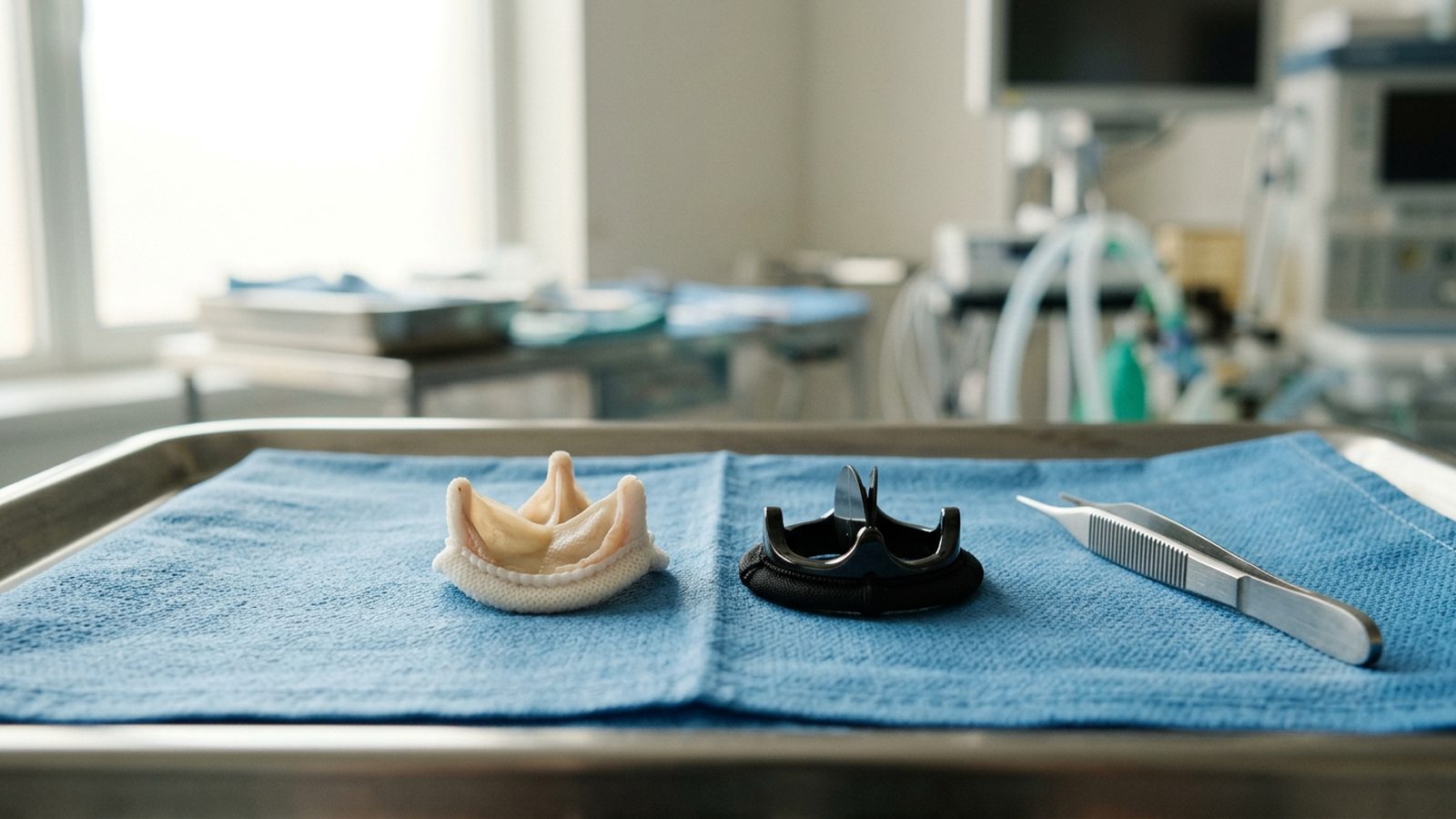
Heart valve replacement: how long the operation takes, biological or mechanical valve, success rate and cost in Morocco
A heart valve that no longer opens enough, or that leaks, ends up wearing the heart out. When medicines are no longer enough, it is replaced. What happens in the operating room, the choice between a biological and a mechanical valve, the real risks, recovery and the cost in Morocco.
Read